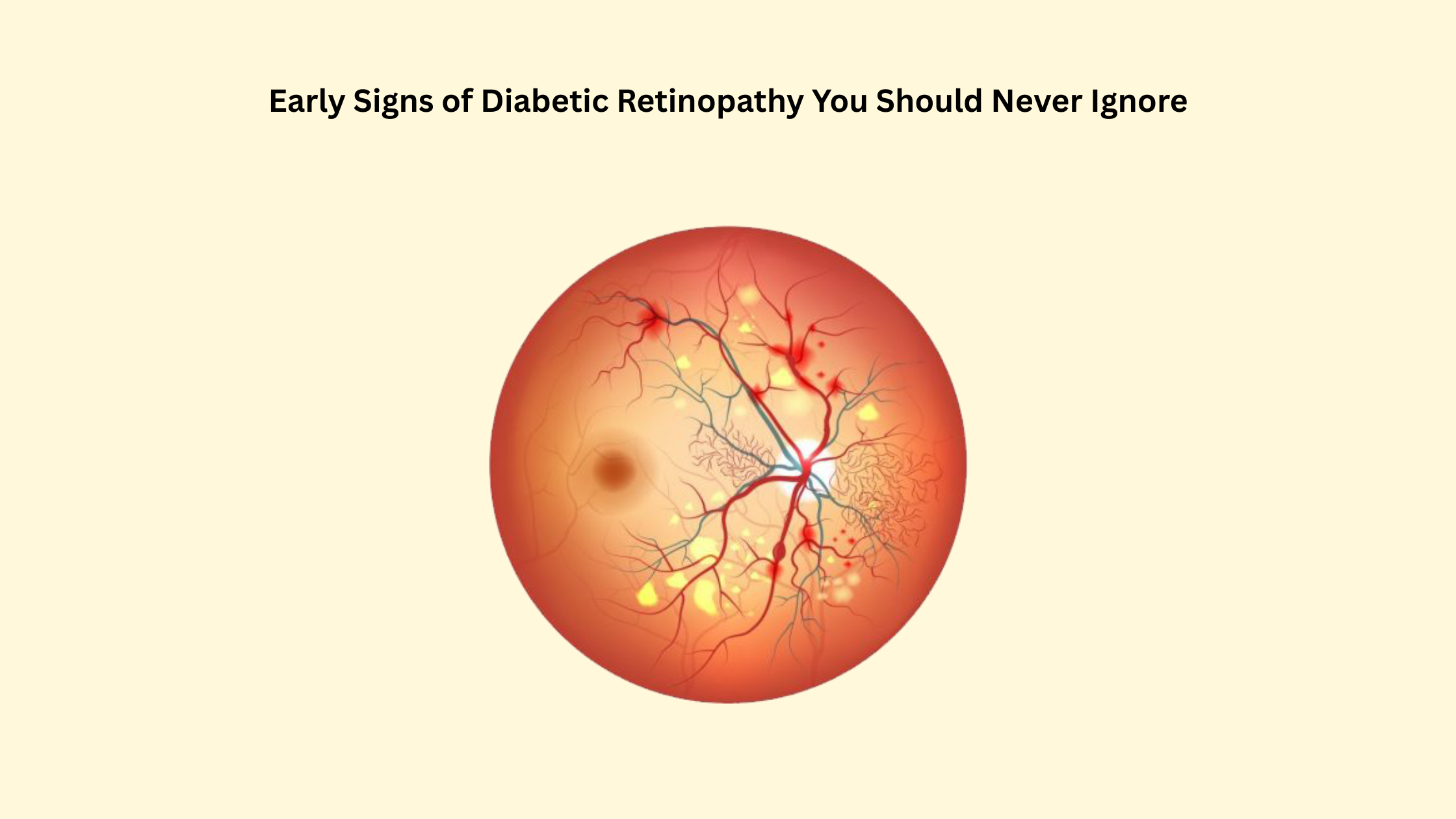
Diabetes doesn’t just affect blood sugar—it affects the eyes too. Diabetic retinopathy, a disorder in which high blood sugar harms the retina’s small blood vessels—the light-sensitive tissue at the back of the eye—is one of the most dangerous consequences.
The biggest challenge? In its early stages, diabetic retinopathy often has no obvious symptoms. That’s why knowing the warning signs—and seeking timely care—can make all the difference in protecting your vision.
Why Diabetic Retinopathy Is Dangerous
If left untreated, diabetic retinopathy can lead to:
- Blurred or fluctuating vision.
- Retinal swelling (macular edema).
- Retinal bleeding or scar tissue formation.
- Permanent vision loss in advanced stages.
It continues to be one of the principal causes of blindness in persons of working age globally.But with early detection and treatment, most vision loss can be prevented.
Early Signs You Should Never Ignore
Even though symptoms may be subtle at first, here are some red flags to watch out for:
- Blurred or Distorted Vision
It becomes challenging to see fine print or straight lines may appear wavy. - Sudden Fluctuations in Vision
Your sight may improve and worsen from day to day. - Floaters or Dark Spots
Small specks or cobweb-like shapes in your field of vision could signal bleeding inside the eye. - Difficulty Seeing at Night
Trouble driving or moving around in dim light may indicate early retinal damage. - Colors Appear Washed Out
Loss of contrast sensitivity can be another subtle but important sign.
Cobweb-like formations or tiny dots in your range of vision could be signs of internal eye hemorrhage.
How Diabetic Retinopathy Is Diagnosed
Diabetic retinopathy is best detected by a thorough dilated eye exam.
- Retinal photography to capture detailed images of the retina.
- Optical Coherence Tomography (OCT) to check for retinal swelling.
- Fluorescein angiography to identify leaking blood vessels.
Regular screening—at least once a year—is recommended for all people with diabetes, even if their vision feels fine.
Advanced Treatment Options
The treatment depends on the stage of the disease:
- Medications & Eye Injections – to reduce swelling and prevent abnormal blood vessel growth.
- Laser Treatment – To stop additional damage and seal leaking vessels, laser treatment is used.
- Vitrectomy Surgery – for advanced cases involving bleeding or scar tissue.
The key is early intervention—treatments work best when started before severe damage occurs.
Expert Eye Care in Mumbai
Managing diabetic retinopathy requires both medical precision and compassionate care. At Tandon Eye Hospital, Mumbai, specialists like Dr. Rashi Tandon, Retina Specialist, provide advanced diagnostic testing and modern treatments to protect vision in diabetic patients. Combined with guidance on diabetes management, the hospital ensures patients receive holistic care.
Final Thoughts
Diabetic retinopathy develops silently but can be devastating if ignored. The early signs—blurred vision, floaters, night blindness, or color changes—should never be taken lightly. Regular check-ups and prompt treatment are the best defenses against vision loss.
Keeping your eyes safe should be your top priority if you have diabetes.. Schedule routine retinal exams, and if you notice any unusual changes in your vision, consult experts like the team at Tandon Eye Hospital right away.
Because when it comes to diabetic eye disease, early action can save your sight.