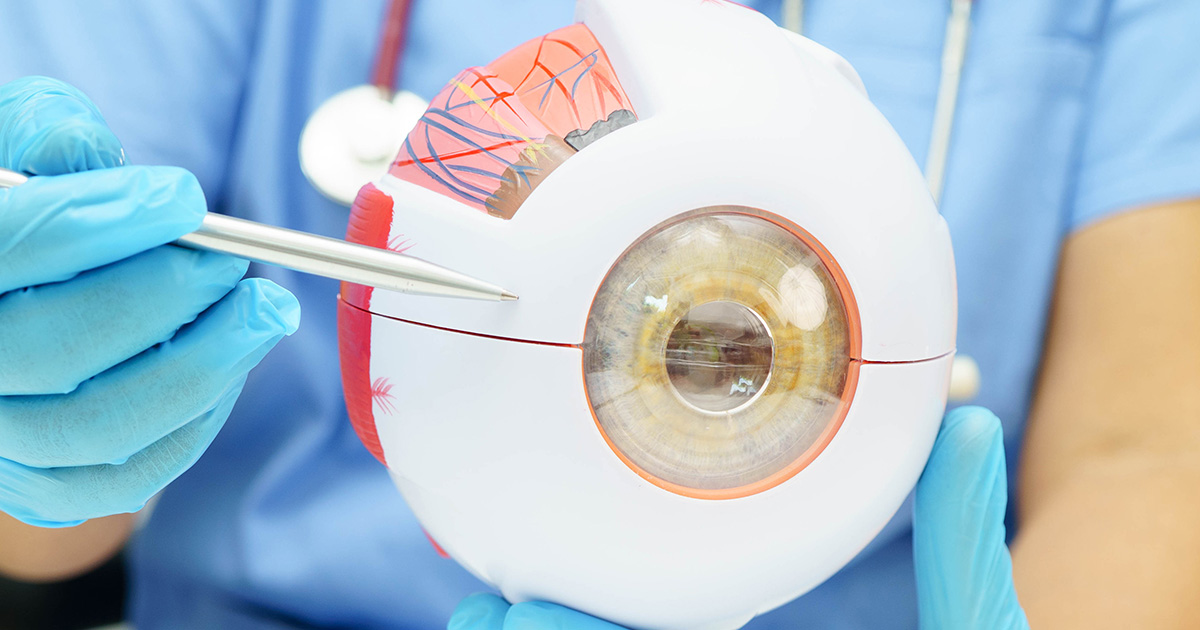
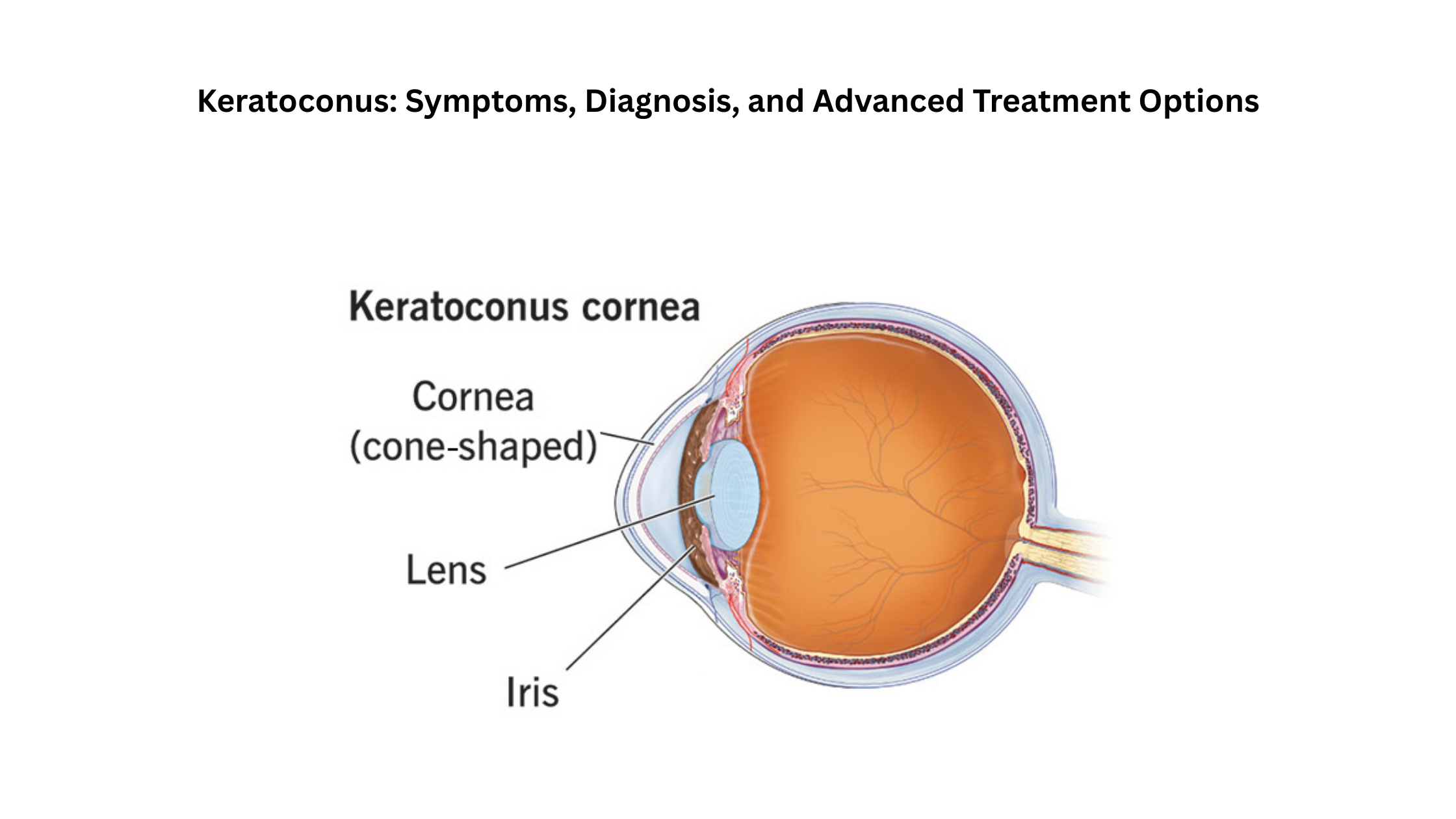
Our eyes are incredibly complex, and one of the most important structures for clear vision is the —the transparent, dome-shaped layer at the front of the eye. In some people, however, the cornea gradually weakens and begins to thin. Instead of maintaining its smooth, round shape, it bulges outward into a cone-like form. This condition is called keratoconus, and it can cause distorted, blurry vision that glasses or standard contact lenses can’t always fix.
The good news? With early diagnosis and modern treatments, keratoconus can be effectively managed and even stabilized.
Symptoms of Keratoconus
Keratoconus usually starts in the teenage years or early adulthood and progresses slowly over time. Some of the common signs and symptoms include:
- Blurred or distorted vision that doesn’t improve fully with glasses.
- Increased light sensitivity (glare and halos around lights).
- Frequent changes in eyeglass prescriptions.
- Difficulty driving at night due to streaking of lights.
- Eye strain or headaches from poor vision.
In advanced stages, vision may become so irregular that only specialized lenses or surgery can help.
How Keratoconus is Diagnosed
Detecting keratoconus early is crucial. Eye doctors use several tools and tests, including:
- Corneal topography: A painless imaging test that creates a detailed map of the cornea’s surface, revealing irregular shapes.
- Pachymetry: Measures the thickness of the cornea.
- Slit-lamp examination: Helps detect early signs of thinning or scarring.
Because keratoconus often progresses silently in its early stages, regular eye check-ups—especially for teenagers and young adults with changing vision—are important.
Advanced Treatment Options for Keratoconus
Thankfully, keratoconus doesn’t always mean severe vision loss. Depending on the stage, different treatments can help:
1. Glasses and Contact Lenses
- In mild cases, eyeglasses or soft contact lenses may be enough.
- For moderate stages, rigid gas permeable (RGP) or scleral lenses provide sharper vision by covering the irregular cornea.
2. Corneal Cross-Linking (CXL)
- A breakthrough treatment that strengthens the cornea using UV light and riboflavin (vitamin B2) drops.
- It doesn’t reverse keratoconus, but it halts progression, reducing the need for corneal transplants in the future.
3. Implantable Corneal Rings (ICRS)
- Small, crescent-shaped inserts placed in the cornea to flatten its cone shape and improve vision.
4. Customized Laser Treatments
- In select cases, advanced laser technology can be used to reshape the cornea and improve vision quality.
5. Corneal Transplant
- For advanced keratoconus where scarring or severe thinning occurs, a partial or full corneal transplant may be necessary.
- With modern techniques, such as lamellar keratoplasty, recovery times are faster, and success rates are high.
Expert Care Matters
Living with keratoconus can feel overwhelming, but timely treatment can preserve vision for decades. At Tandon Eye Hospital in Mumbai, advanced corneal care is led by Dr. Ayush Tandon, Cornea Specialist, who has expertise in treatments like corneal cross-linking, customized LASIK, and corneal transplants. With cutting-edge diagnostics and personalized care, patients receive not just treatment, but the reassurance of being in safe hands.
Final Thoughts
Keratoconus is not the end of clear vision—it’s a condition that can be managed with the right care at the right time. If you or someone you know is experiencing blurred vision, frequent prescription changes, or unusual glare, don’t ignore the signs.
Early diagnosis and advanced treatments—like those available at Tandon Eye Hospital—can make all the difference. Because when it comes to your eyes, every step toward clarity is a step toward living life to the fullest.