Children learn about the world largely through what they see. From reading books to writing on the board, clear vision plays a major role in their academic performance and overall development. Yet, eye health in children is often overlooked, mainly because they do not always express when something is wrong.
Many vision problems begin early but go unnoticed until they start affecting schoolwork or behaviour. This is where Early eye screening becomes important.
Why Children May Not Report Vision Problems
Unlike adults, children may not realise that their vision is not normal. If they have been seeing blurred images from the beginning, they may assume that this is how everyone sees.
Instead of complaining, they often adapt. They may sit closer to the board, avoid reading, or lose interest in activities that require focus. These changes can easily be misunderstood as a lack of attention or interest, when the real issue could be related to vision.
Common Eye Problems in School-Going Children
Several eye conditions can affect children during their school years:
- Refractive Errors: Myopia (difficulty seeing far objects), hyperopia, and astigmatism
- Amblyopia (Lazy Eye): Reduced vision in one eye due to poor development
- Strabismus (Squint): Misalignment of the eyes
- Eye Allergies: Causing redness, itching, and watering
- Digital Eye Strain: Increasing due to screen use
Most of these conditions can be managed effectively if detected early.
Signs Parents and Teachers Should Watch For
Children may not say “I can’t see,” but their behaviour can provide clues.
Look out for:
- Squinting while reading or looking at distant objects
- Sitting very close to the TV or holding books too near
- Frequent eye rubbing
- Complaints of headaches, especially after studying
- Losing place while reading
- Tilting the head to see clearly
- Reduced interest in reading or writing tasks
If these signs are noticed, an eye check-up should not be delayed.
The Role of Early Eye Screening
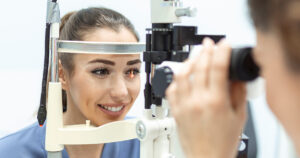
Eye screening helps detect problems before they become serious. It is not just about checking whether a child needs glasses. It also helps identify conditions that may affect long-term vision development.
Early screening is especially important because:
- The visual system is still developing in childhood
- Conditions like lazy eye respond better to treatment at a younger age
- Early correction improves learning and confidence
Many schools now include vision screening as part of routine health checks, but a detailed eye examination by a specialist is equally important.
Impact of Screen Time on Children’s Eyes
In today’s environment, children are exposed to screens at a much earlier age. Online classes, mobile games, and digital content have increased overall screen time.
Excessive screen use can lead to:
- Eye strain
- Dryness
- Reduced blinking
- Increased risk of myopia progression
Balancing screen time with outdoor activities is important for healthy eye development.
What Parents Can Do
Supporting a child’s eye health does not require complex steps. A few simple habits can help:
- Schedule regular eye check-ups, even if there are no visible problems
- Encourage outdoor playtime daily
- Limit unnecessary screen use
- Ensure proper lighting while studying
- Pay attention to behavioural changes related to vision
Creating awareness at home is just as important as medical care.
When Should You Consult an Eye Specialist?
It is advisable to consult an eye specialist if:
- Any of the warning signs are noticed
- There is a family history of eye problems
- The child complains of blurred vision or headaches
- There is visible eye misalignment
Early consultation can help prevent long-term complications.
Pediatric Eye Care at Tandon Eye Hospital
At Tandon Eye Hospital, pediatric eye care focuses on early detection and child-friendly evaluation. Examinations are designed to be comfortable for children while ensuring accurate diagnosis.
Parents are also guided on daily habits and preventive care to support their child’s visual development.
Final Thoughts
Clear vision is essential for a child’s learning and growth. Since children may not always express their difficulties, regular eye screening becomes an important part of their healthcare.
Early detection not only improves vision but also supports confidence, learning, and overall development. A simple eye check-up at the right time can make a meaningful difference in a child’s future.