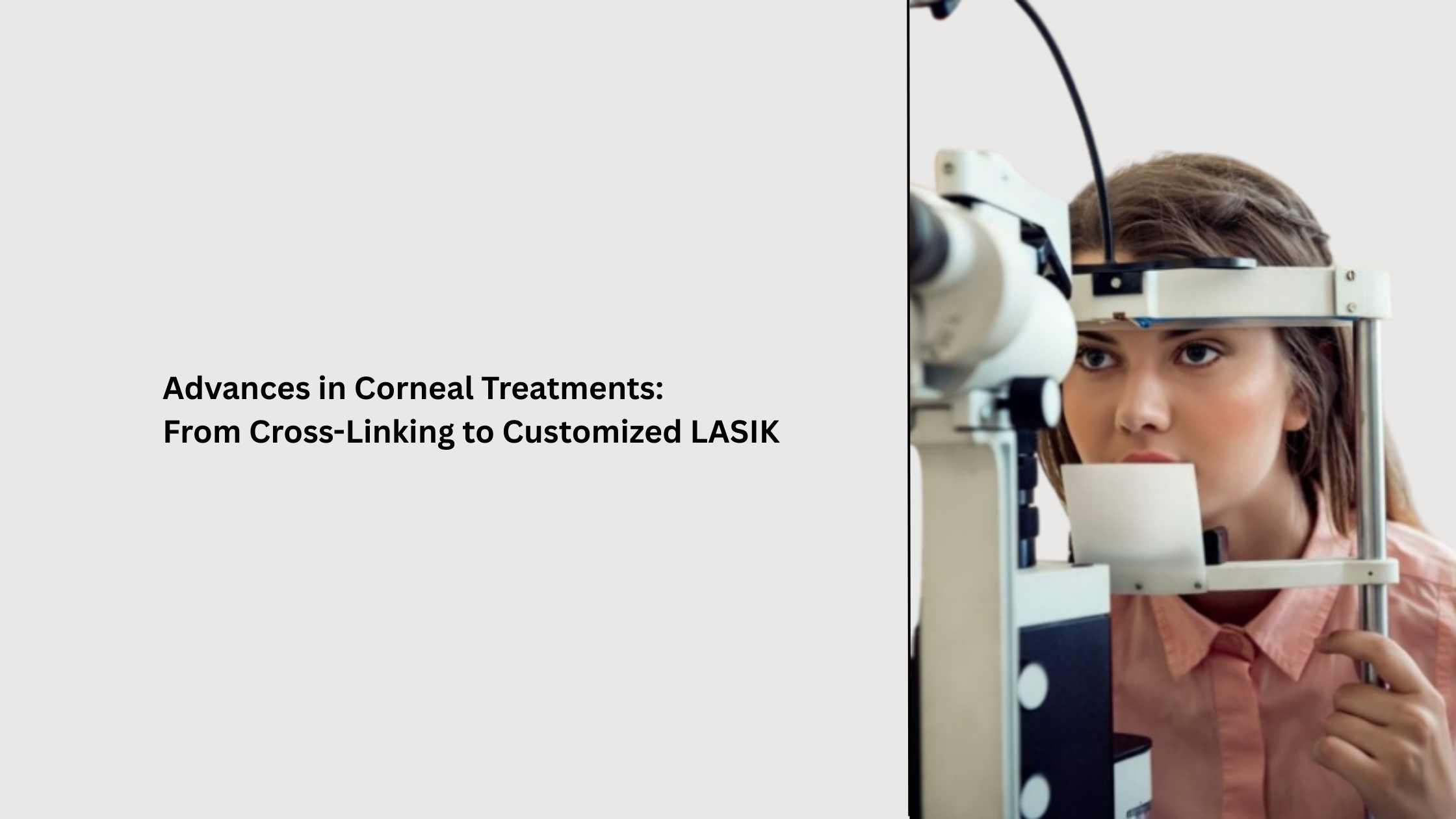
The cornea is the structure that allows us to focus and view the world in fine detail, and it is more than simply the transparent front window of the eye.. Over the years, corneal treatments have advanced dramatically, offering patients safer, more precise, and highly effective solutions for vision problems. From corneal cross-linking to customized LASIK, today’s options are transforming the way eye specialists restore and protect vision.
Corneal Cross-Linking: Strengthening the Weak Cornea
One of the most significant advances in corneal care is corneal cross-linking (CXL), especially for patients with keratoconus.
- What is it?
Cross-linking is a minimally invasive procedure that uses riboflavin (vitamin B2) eye drops combined with UV light to strengthen the collagen fibers in the cornea. - Who benefits?
Patients with keratoconus or corneal ectasia, where the cornea becomes thin and cone-shaped, leading to distorted vision. - Why it matters?
Instead of just managing symptoms with contact lenses, CXL actually halts disease progression, preserving vision and reducing the need for corneal transplant in many cases.
Topography-Guided and Customized LASIK
LASIK has been a popular procedure for decades, but today’s customized LASIK takes precision to the next level.
- How is it different?
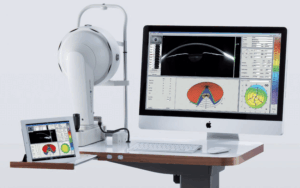
Traditional LASIK reshapes the cornea based on standard measurements. Customized LASIK, however, uses corneal topography and wavefront technology to map the unique imperfections of each eye. - Benefits:
- Sharper vision quality.
- Reduced risk of glare and halos.
- Better outcomes for people with irregular corneas.
- Sharper vision quality.
For patients who previously weren’t good candidates for LASIK, these advanced techniques are opening new possibilities.
Advanced Lamellar Surgeries
Complete corneal replacement is not usually necessary for modern corneal operations.With procedures like DALK (Deep Anterior Lamellar Keratoplasty) and DMEK (Descemet’s Membrane Endothelial Keratoplasty), only the diseased layer of the cornea is replaced.
- Advantages:
- Faster healing compared to full corneal transplants.
- Lower chances of rejection.
- Improved long-term vision stability.
- Faster healing compared to full corneal transplants.
Artificial Corneas (Keratoprosthesis)
For patients with multiple failed corneal transplants or severe corneal scarring, artificial corneas are becoming a reliable alternative. These biocompatible implants are designed to restore sight in cases where traditional methods are not successful.
The Role of Technology and Expertise
What makes these treatments so successful is not just the technology, but also the expertise behind it. At Tandon Eye Hospital in Mumbai, advanced corneal procedures—from cross-linking to customized LASIK—are performed by specialists like Dr. Ayush Tandon, Cornea Specialist. With a focus on precision diagnostics, state-of-the-art lasers, and patient-centered care, the hospital ensures that each treatment is tailored to the individual’s needs.
Protecting Your Cornea for the Future
Advancements in corneal treatments mean that patients no longer have to wait until vision deteriorates severely. Early diagnosis and timely intervention can preserve sight and improve quality of life.
If you notice symptoms like blurred or distorted vision, increased light sensitivity, or frequent changes in your glasses prescription, it’s worth scheduling a comprehensive eye check-up. Modern treatments are not just about restoring vision—they are about preserving it for the future.
Final Thoughts
From cross-linking that strengthens weak corneas to customized LASIK that reshapes vision with unmatched accuracy, corneal care has never been more advanced or more hopeful. With expert guidance and cutting-edge treatments available at centers like Tandon Eye Hospital, patients today have more opportunities than ever to protect their sight and enjoy life with clear, confident vision.