Why Is Pentacam Important Before LASIK?
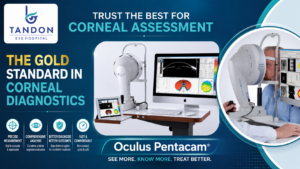
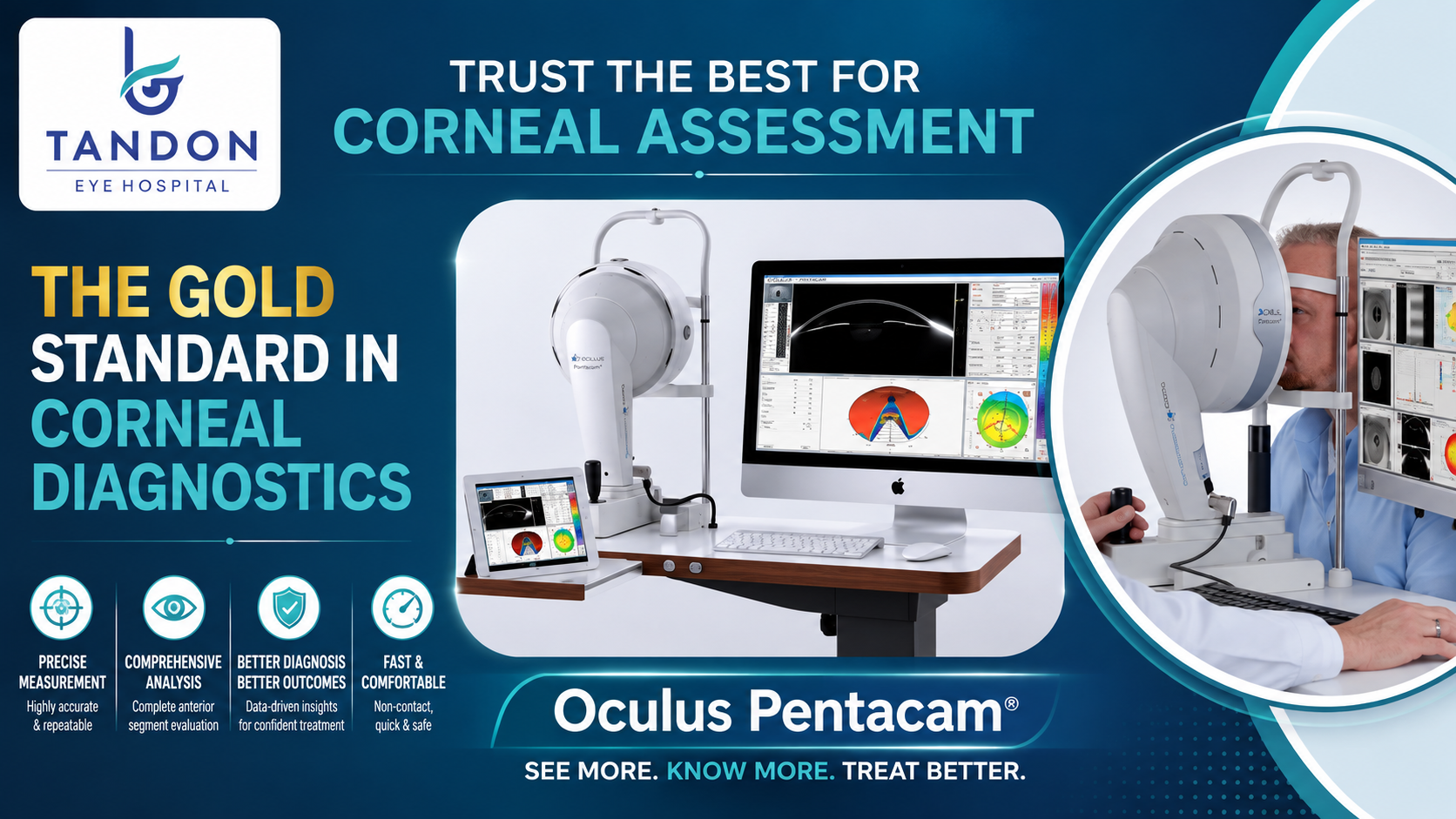
Pentacam is one of the most important investigations performed before LASIK. A routine eye-power test tells us how much spectacle power needs to be corrected, but Pentacam gives us detailed information about the shape, thickness and structure of the cornea.
What does Pentacam check?
1.Corneal shape : It creates a detailed 3D map of the cornea and can detect abnormal curvature that may not be obvious during a routine examination.
2.Keratoconus screening : Pentacam can identify signs of keratoconus and other corneal abnormalities. Detecting these conditions is extremely important because LASIK may not be appropriate in an abnormal or structurally weak cornea.
3.Corneal thickness : It measures corneal thickness at different locations. This helps the surgeon determine whether there is adequate corneal tissue for laser treatment.
4.Residual stromal thickness : The surgeon can estimate how much corneal tissue will remain after the procedure. Maintaining adequate residual tissue is an important part of assessing LASIK safety.
Before LASIK, don’t just ask “What is my eye power?” Ask “Is my cornea suitable for laser surgery?”
Pentacam helps answer that question.
Overall suitability for LASIK Pentacam findings are considered along with your spectacle prescription, age, tear-film status, corneal examination and other tests to determine whether LASIK, SMILE, PRK, ICL, or no refractive surgery is the most appropriate option.
Why is this important?
LASIK permanently reshapes the cornea. Therefore, having a suitable corneal structure is more important than simply having a correctable spectacle number.A good spectacle number does not automatically make someone a good LASIK candidate.
A comprehensive pre-LASIK evaluation with Pentacam helps the surgeon identify patients who may be at increased risk and choose the safest treatment option.